MENU
TH EN

02B-1. Bharat Sages 1 - Saptaṛṣi including

The Ancient Bhārat Philosophers was developed by Oct.6, 2024.
02B-1. Bhārat Sages 1 - Saptaṛṣi Including
First revision: Oct.6, 2024.
Last change: Oct.12, 2026.
Searched, gathered, rearranged, translated, and compiled by
Apirak Kanchanakongkha
.
1.

Page 1
 1.  Jaimini (जैमिनि)
1.
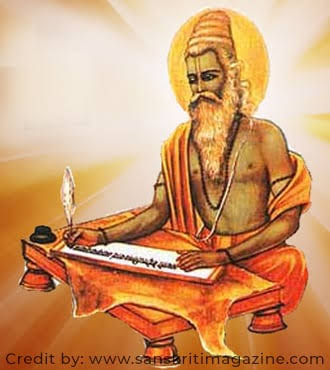
Mahā Ṛṣi Jaimini, source: www.sanskritimagazine.com via www.astroved.com, access date: Sep.29, 2026
1
     1.1 School of thought: 
मीमांसा  - Mīmāṁsā
     1.2 Details: He composed Mīmāṁsā Sūtra (मीमांसा सूत्र - MS.), roughly 243-343 BE. (or 300-200 BC) was one of the most important scholars of ancient Hinduism. He was one of the disciples of the great sage Vyāsa, the author of the Mahābhārata, and the proposer and developer of the Bhurva philosophy (Bhurva or Purva means "pre-existing" or "east").
1.
2.
 2.  Śaṁkara, Adi Shankara (आदिशङ्कर)
1.
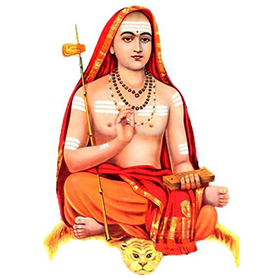
Source: https://devdutt.com, access date: Oct.6, 2024
1.
 
     2.1 School of thought: Advaita Vedānta.
     2.2 Details: He was born in Kaladi, Cher, around 1343 BE. (or 8th CE, according to some sources, around 788-820 CE or 1331-1363 BE). He died in Kedahnat, Guchara-Pradih, around 1393 BE (750 CE). He was a scholar and theologian whose work had a profound impact on the teachings of Advaita Vedanta. Furthermore, he founded four monasteries (Mathas) which are believed to have helped to revive and expand the history and doctrines of Advaita Vedanta. He is a prominent Hindu sage, considered an avatar of Shiva. He authored the Puranas and Vedanta commentaries, and is credited with founding the Advaita Vedanta school of thought. Likewise, he is honored as the compiler and organizer of the core teachings of Hinduism. His writings in Sanskrit discuss the oneness of Atman and Nirguna Brahman, a Brahman without form or qualities (or Brahman without attributes). Source: http://www.encyclopedia.com/religion/dictionaries-thesauruses-pictures-and-press-releases/sakara and th.wikipedia.org/wiki/ศังกราจารย์, accessed May 4-8, 2017.
1.
2.
 3.  Mahāvīra ( महावीर) or Vardhamāna (वर्धमान)
1.
1.
     3.1 
School of thought: जैन - Jain.
     3.2 Details: see Jainism.
1.
2.
 4.  Gautama Buddha (बुद्ध)
1.

     4.1 School of thought: Buddhism.
     4.2 Details: see details in: Buddhism and A04. Siddhartha Gautama.
1.
2.
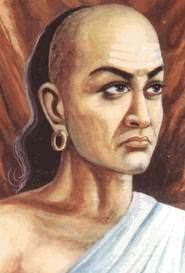
 5.  Kauṭilya (कौटिल्य)
1.

Source: worldhistory.org, access date: Oct.1, 2026.
1.
     5.1 School of thought: Practical Governance; strategies of statecraft.
     5.2 Details: Known variously as Cāṇakya or Viṣṇugupta, he lived for approximately 87 years (c. 174–261 B.E. / 370–283 B.C.E.). Born in southern Bharata and passing away in Pataliputra, he was a sage and the royal mentor and advisor to King Chandragupta of the Mauryan Empire. He subsequently served as an advisor to King Bindusara (Chandragupta’s son) and supported the ascension of Emperor Ashoka the Great. His major works include the Arthaśāstra and Cāṇakyaniti.
3.
4.


humanexcellence.thailand@gmail.com