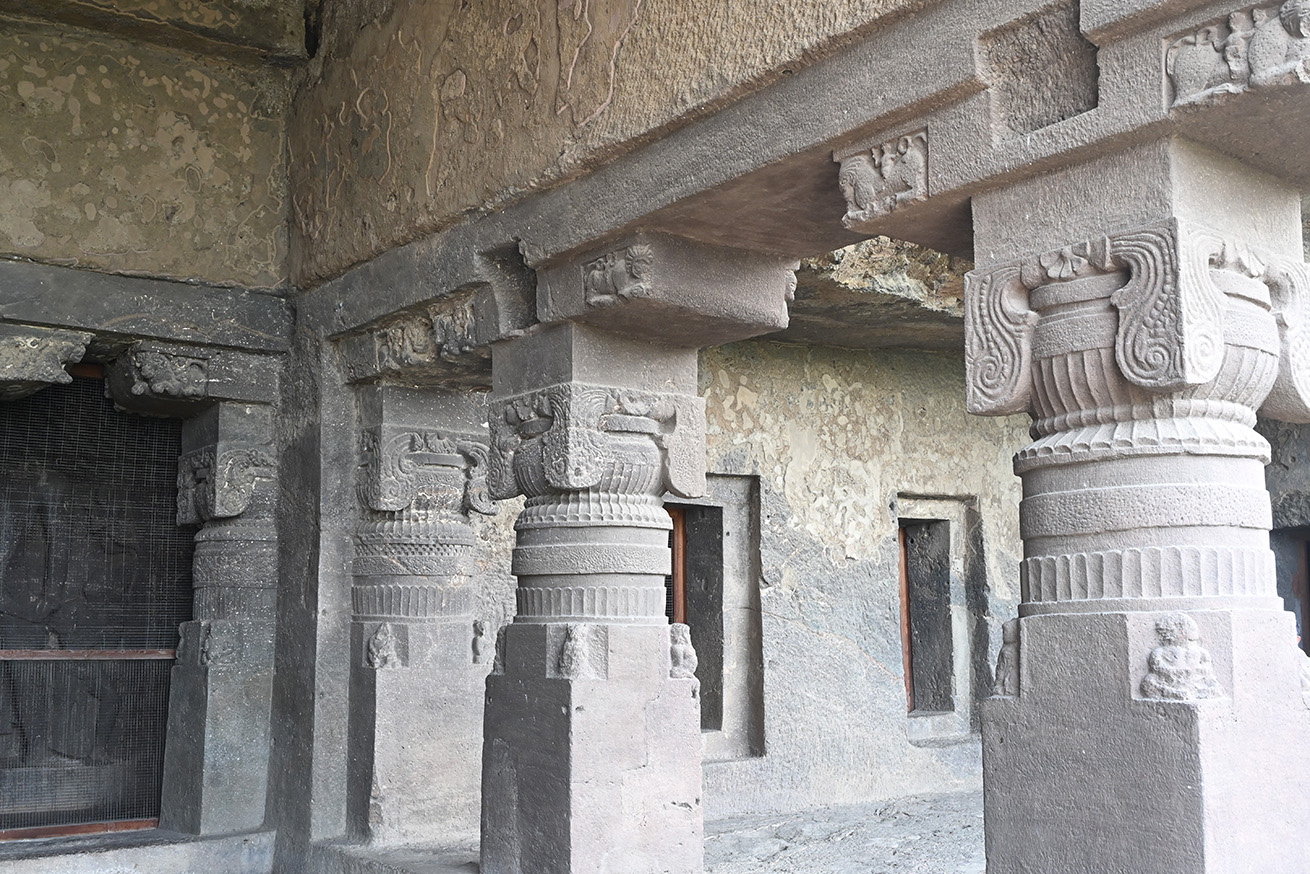
Pic: I took this picture on top of Cave No.16, "Kailāsa," on July 20, 2023.
IND-002: Ellora Caves
First revision: Aug.3, 2023
Last change: Oct.9, 2026
Searched, gathered, rearranged, translated, and compiled by Apirak Kanchanakongkha.
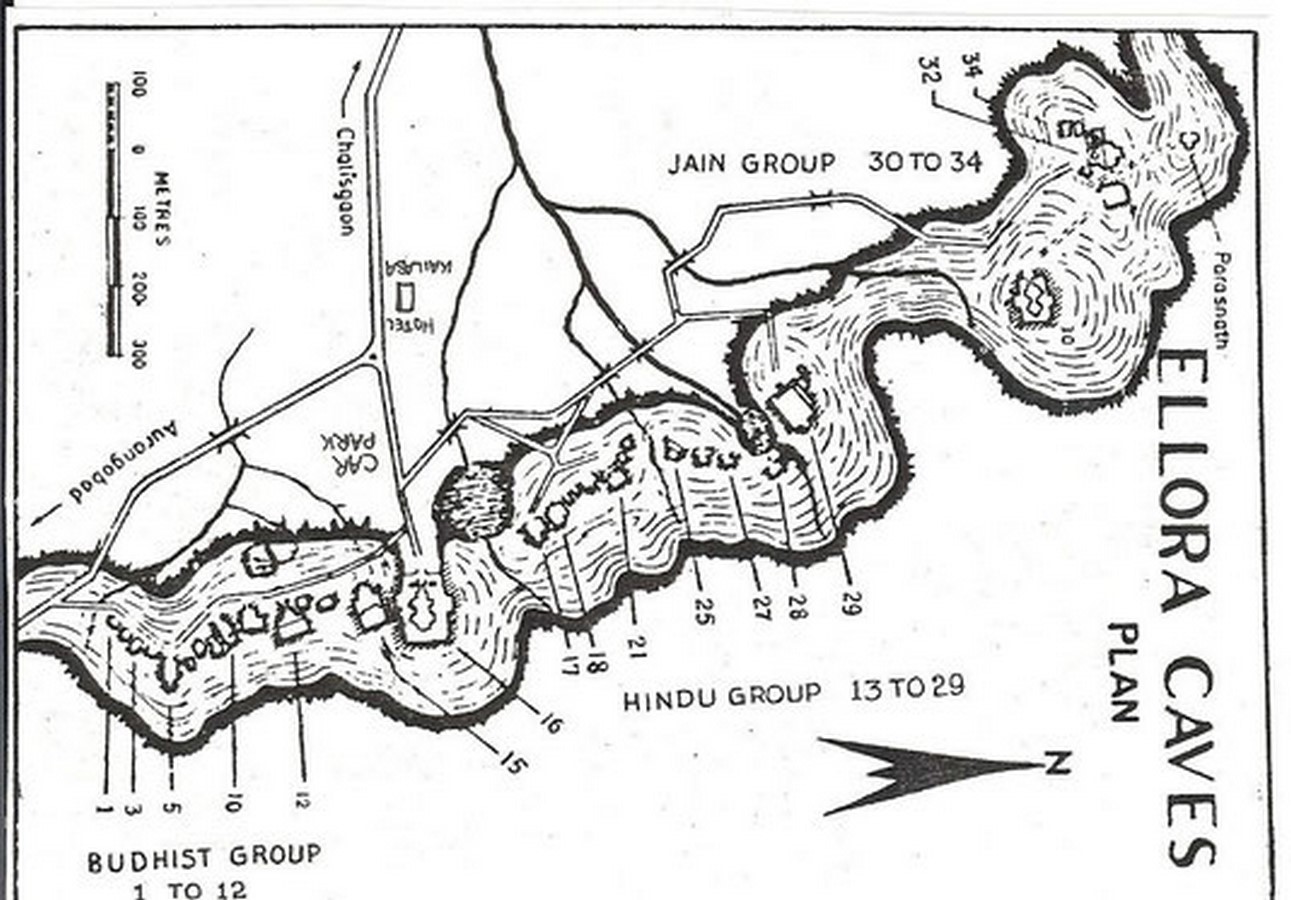
Map of the Ellora Caves, Source: re-thinkingthefuture.com, Access date: Aug.03, 2023.
Cave No.1
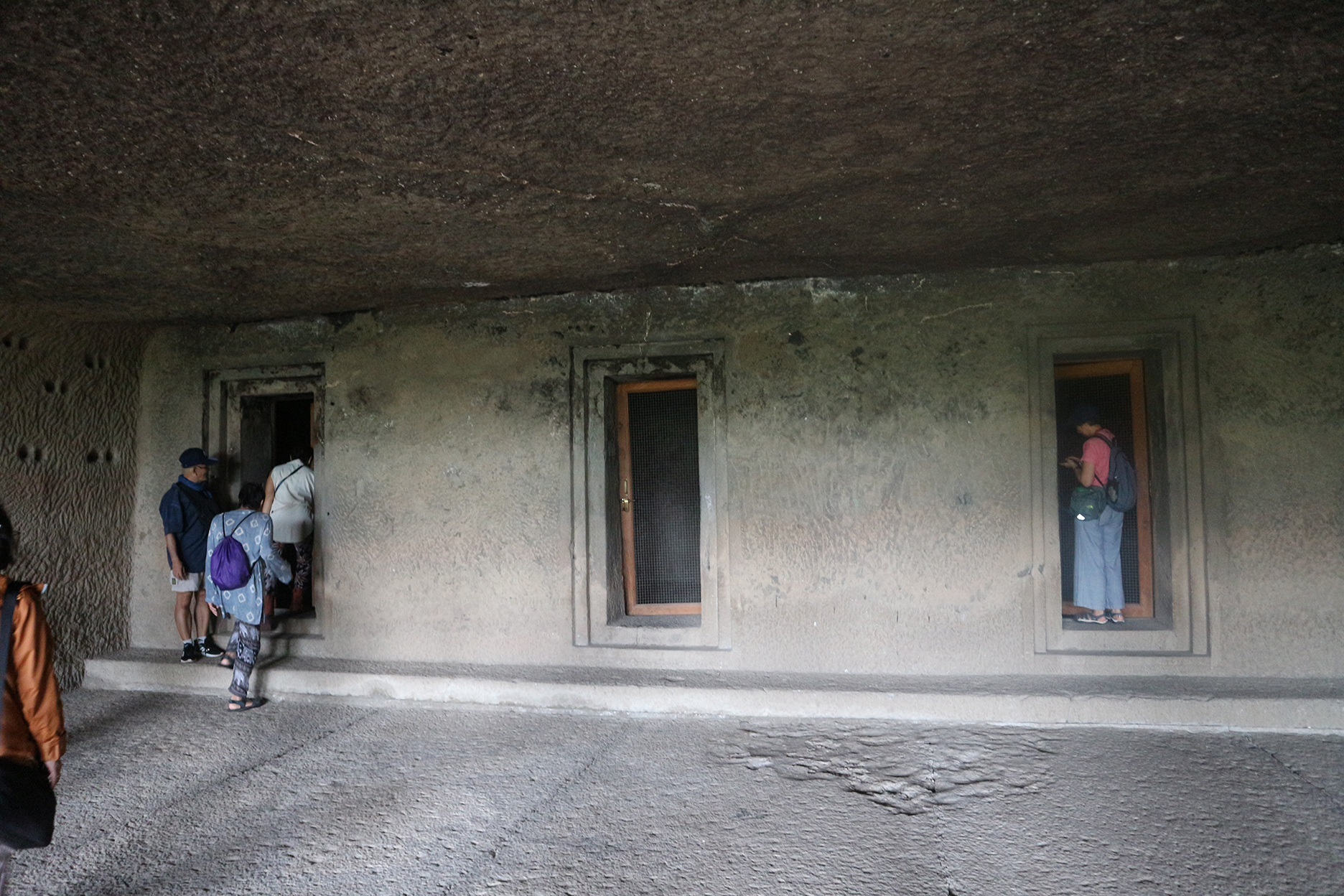 Took a picture on July 20, 2023.
 Cave No.1 is an uncomplicated Vihara with no pillars or carvings. The monks used four cells in the south and east walls around a 13-meter square assembly hall for residential purposes, as there are no images of Buddha, Gods, and Goddesses.
Cave No.2
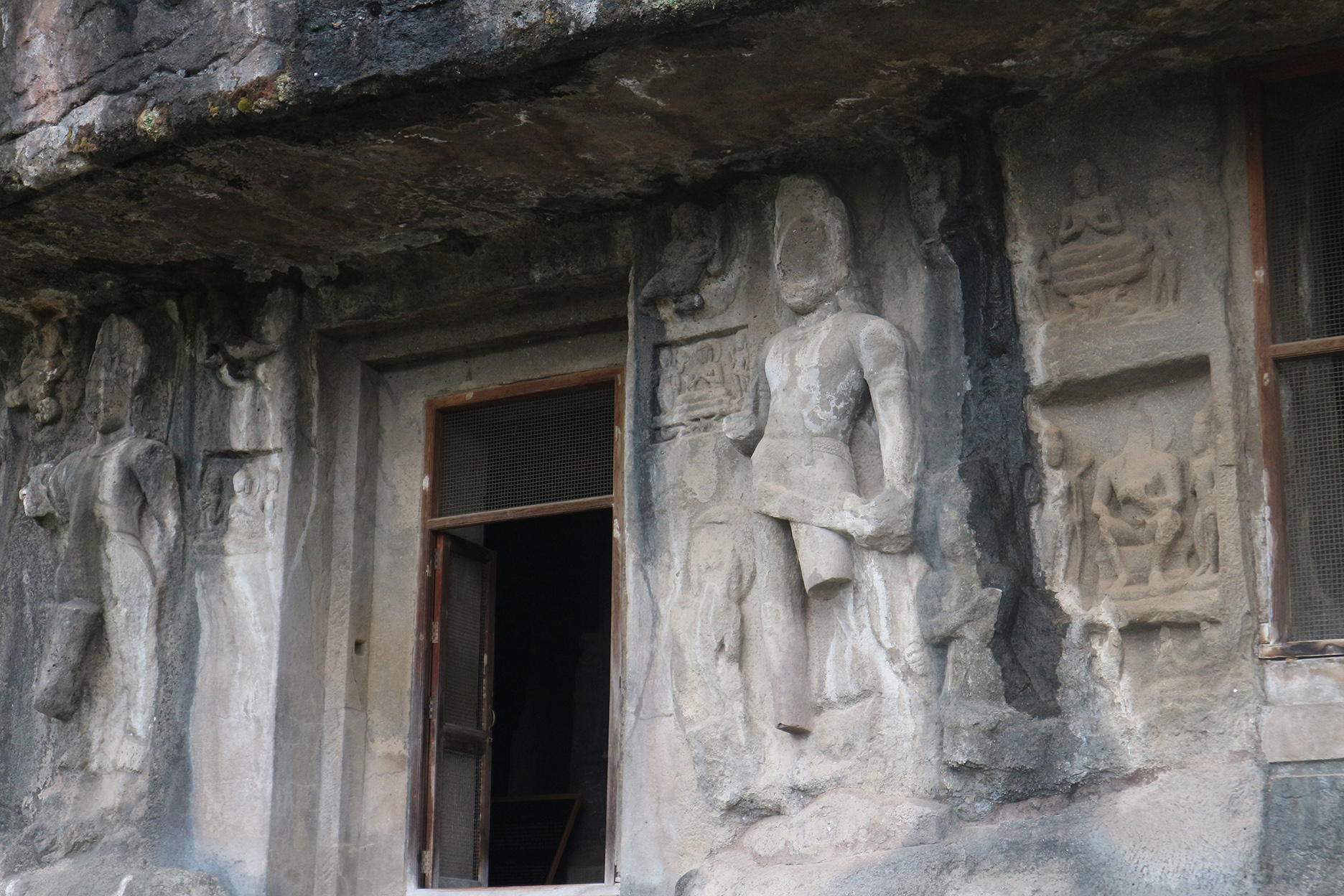 Dvārapālas took a picture on July 20, 2023.
Cave No.2 was a hall for worship and is accessed by a flight of stairs. At the cave door are Dvārapāla (द्वारपाल - guard or doorkeeper) flanked by windows. The interior (14.5 sq.m.) has a hall. Twelve pillars support this hall. Some of the pillars are decorated with pot and foliage motifs. A gallery runs down each side. In the center of the back wall is a 3-meter-high seated Buddha and two standing Buddhas, while along each of the side walls are five Buddhas accompanied by Boddhisattvas (बोधिसत्त्व) and Apsarā (अप्सरा - celestial nymph).
Cave No.3
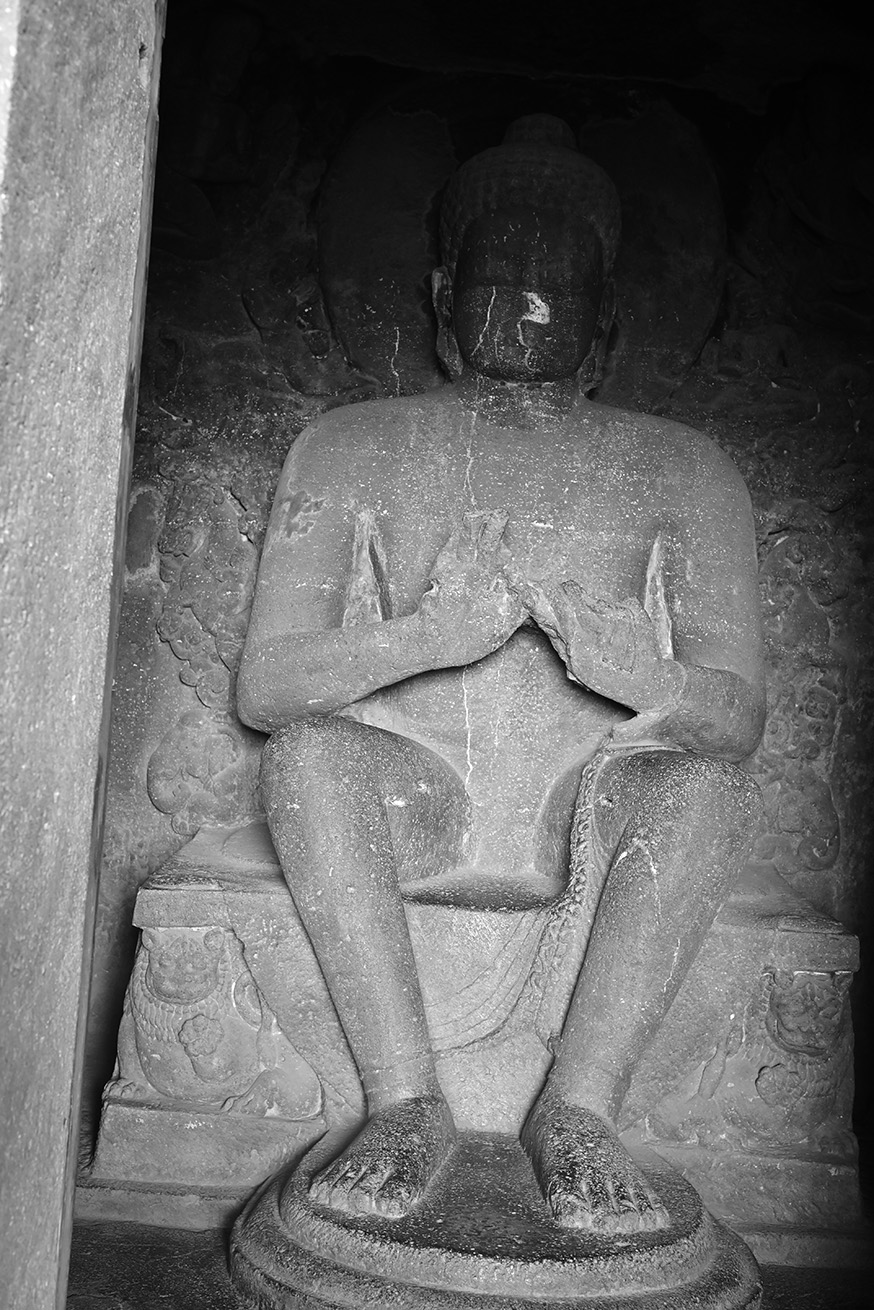
It has a square central chamber with a Buddha image, this time seated on a lotus supported by Naga figures with snake heads. It has a chapel at the portico's end. Around the wall are 12 meditation cells.

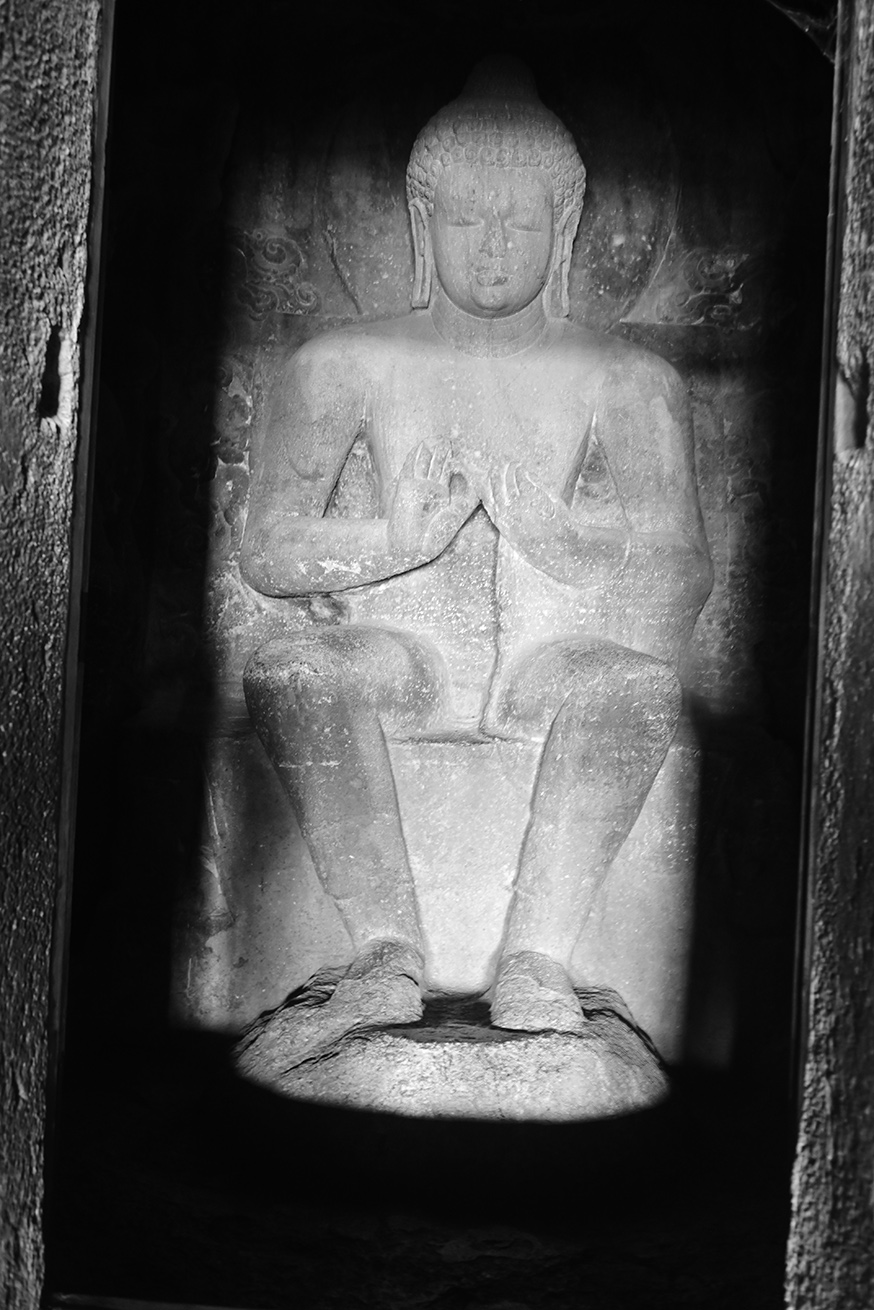
Sculpture of Buddha in the diamond meditation pose or Paddhamasana, source: www.indiathatwas.com, access date: Mar.26, 2024.

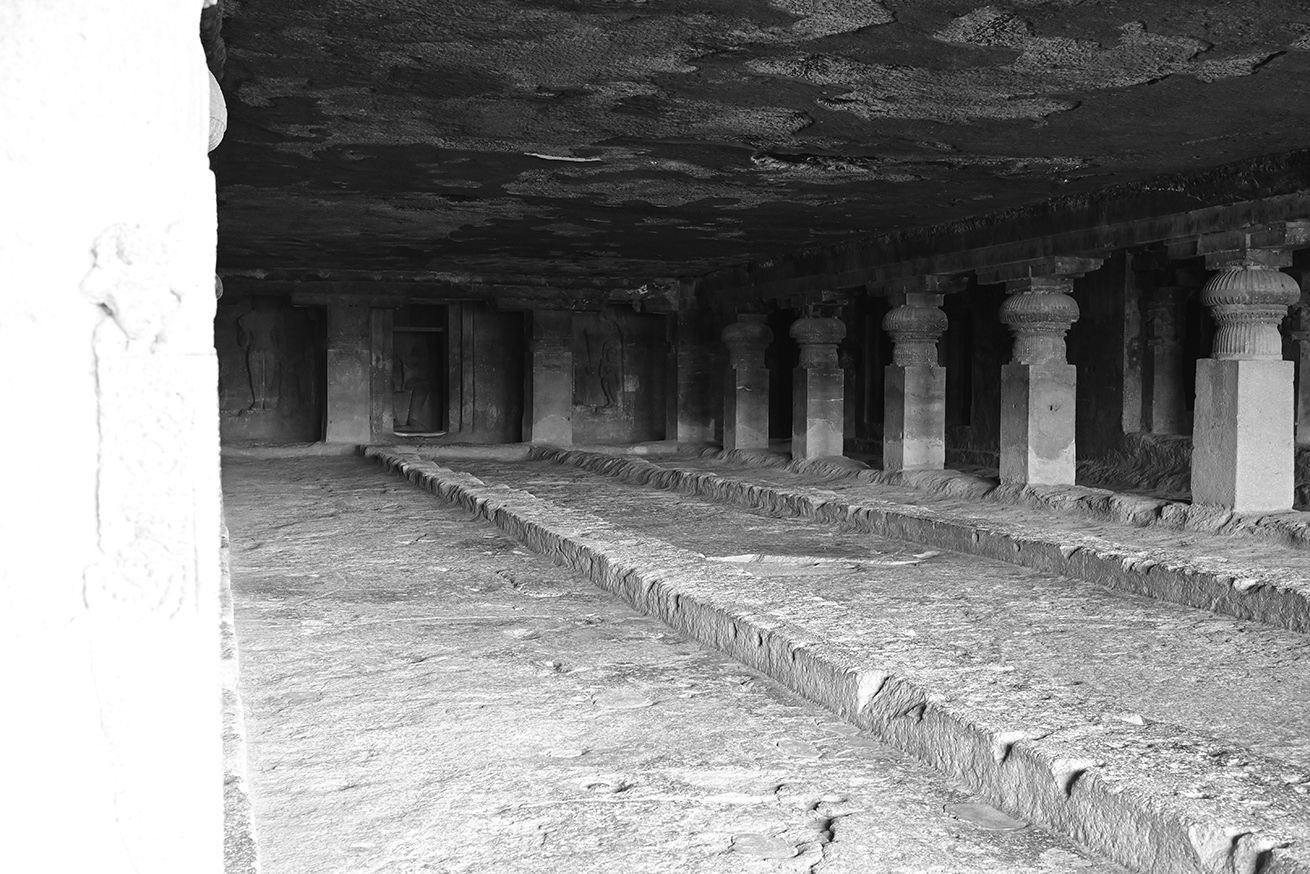
Inside Cave No.3, source: smarthistory.org, access date: Mar.26, 2024.

Sculpture of Avalokiteshvara or Bodhisattva Padmapani, taken on July 19, 2023.
Cave No.4
Cave No.4 has largely collapsed. The outer half is almost completely gone. The cave measures 35*40 feet.
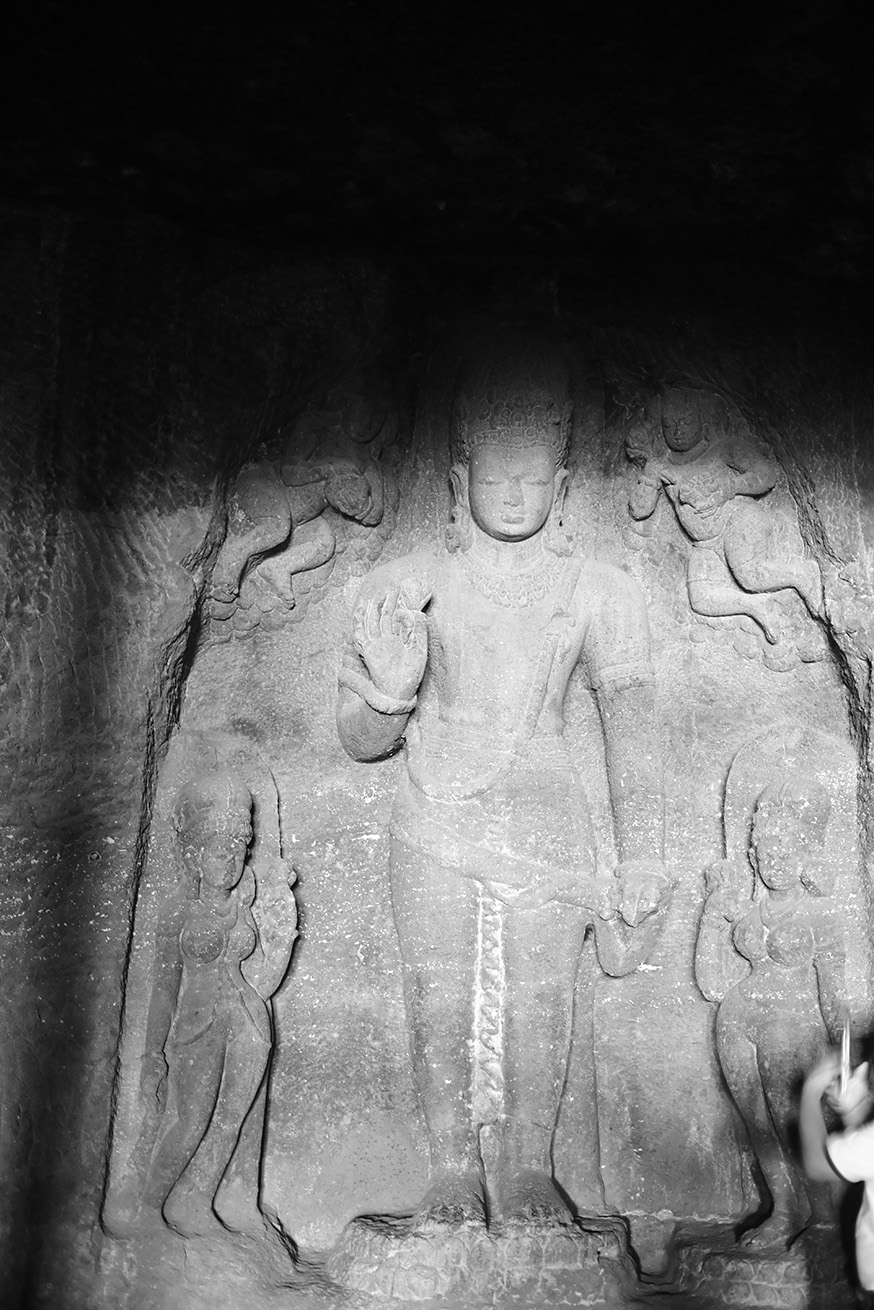
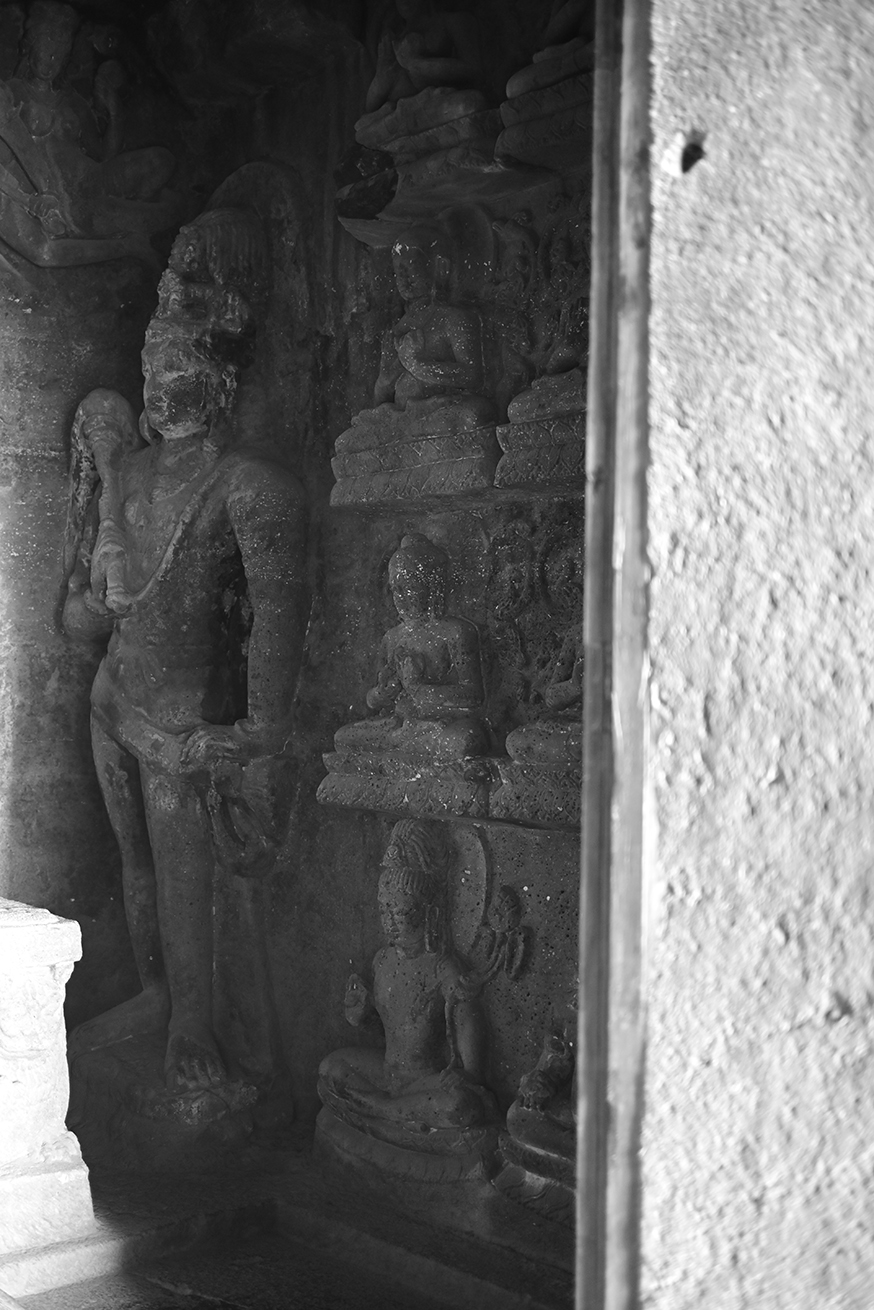
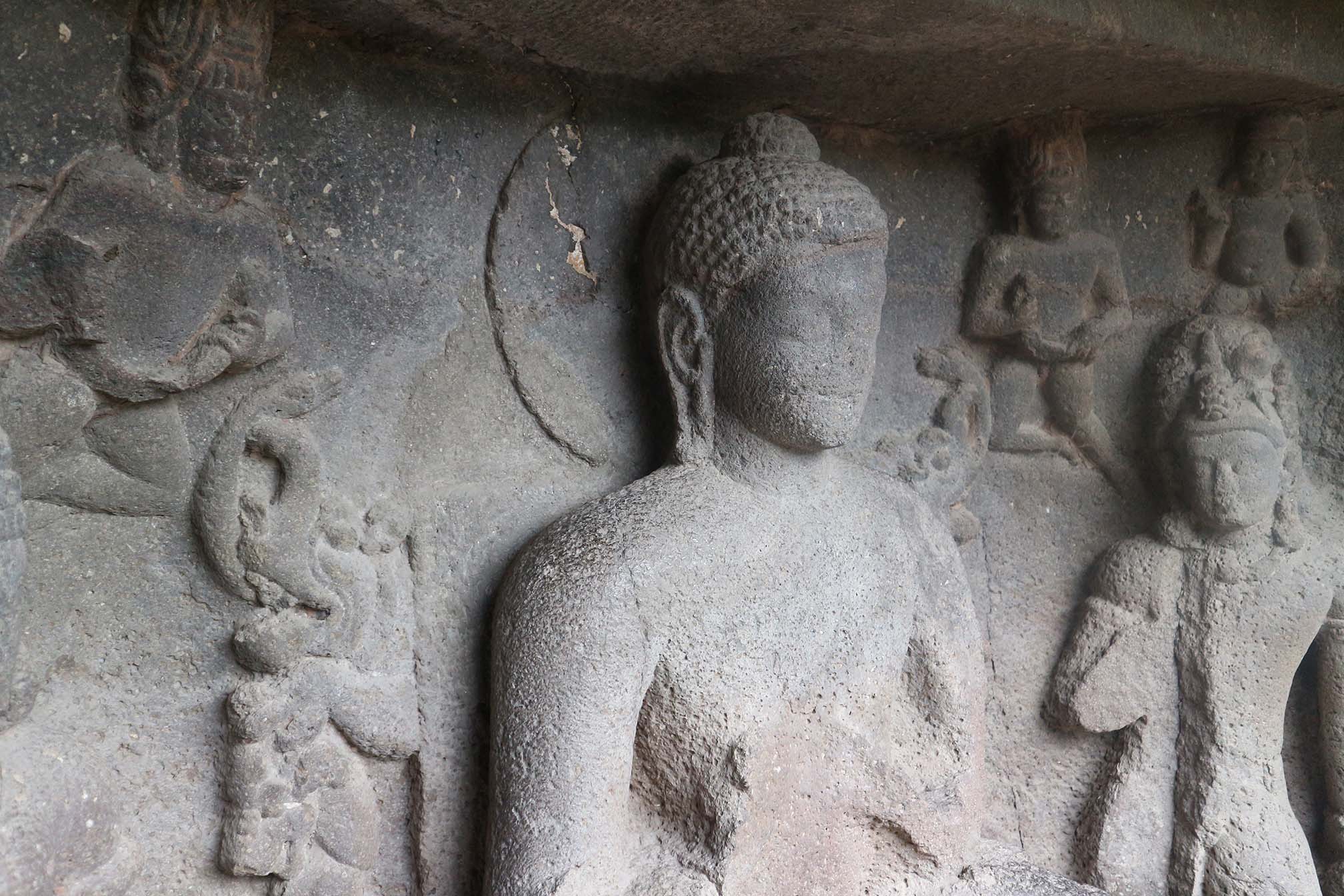 Inside the cave, there is a stone carving of Buddha seated in Bhadrasana. The sandstone on the left hand is very loose. There are Buddhist disciples, angels around, and dwarf gods flying above. There are female deities (Jata mukuta) standing holding a rosary on the left side, and on the right side is a god. It is assumed that it is Vajrapāni, The bodhisattva wearing a crown. Leaning on the large dwarf god on the right, taken on July 19, 2023.
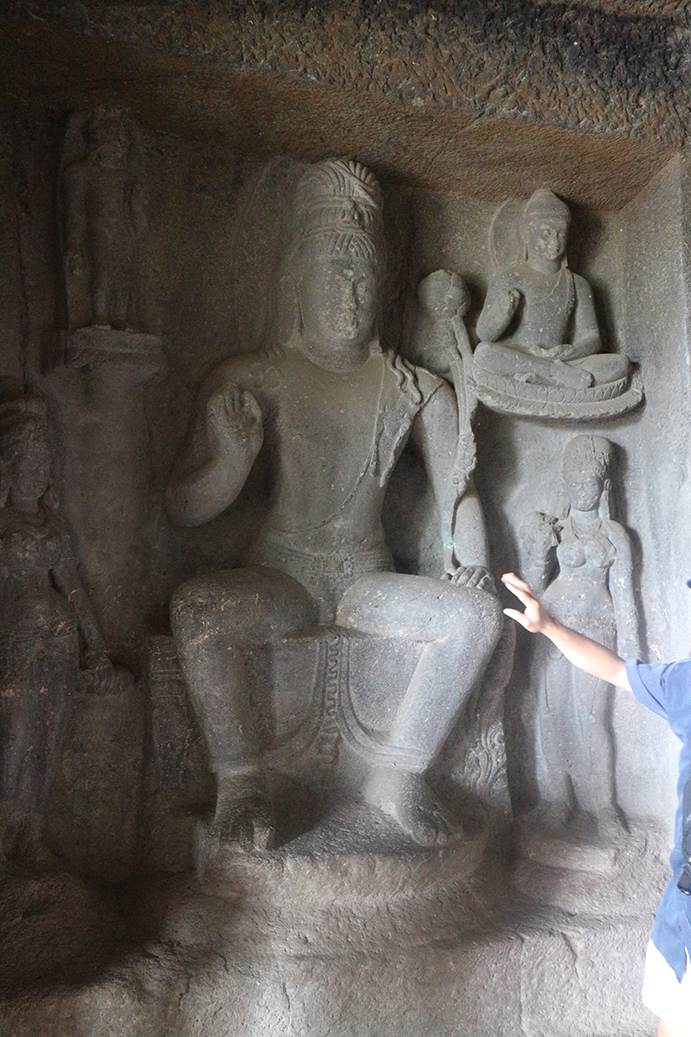 Left side of the cave, there is a stone carving of the Bodhisattva. Avalokiteshvara or Padmapani is seated. His head is high. There is a tiny Buddha on the front head. There is a key hanging on the right shoulder. The upper part of the left shoulder has a deerskin draped over it. He holds a mala or rosary in his right hand. He held a lotus flower on his left thigh. Left and right, there are female deities taking care of him. One holds a rosary in his right hand. (Some say that this female deity's name is Tara, and she holds a pitcher of water.) One in her right-hand holds a lotus bud. (Some say it is a female deity named Bhrikuti holding a bouquet of lotus flowers.) In the background is a standing Bodhisattva or Buddha, taken on July 19, 2023.
1.
2.
Cave No.5
This is a very big and impressive Buddhist monastery (53.28 x 36.63 m), datable to circa 7th century A.D. The oblong hall, the two side chapels with cells, an antechamber and a sanctum are the chief architectural components.
Taken on Nov.11, 2024.
1.
The massive pillars in the hall are decorated with paintings. The hall seems to have been used for monks as an assembly hall, dining room and also for Ritualistic purposes. The sanctum houses Lord Buddha in preaching posture and is guard by two huge Bodhisattvas.
1.
2.
Cave No.6
Cave No.6 is widely considered by modern scholars to be the earliest constructed Buddhist cave at the site. Carved during the 7th century CE under the patronage of the Early Chalukya dynasty, it serves as a highly ornate vihara (monastic residential hall and shrine).
Taken on Nov.11, 2024.
Key Architectural & Artistic Highlights
- The Sacred Monastic Layout: The interior features a typical vihara design with an open communal courtyard area lined with columns and low stone benches where monks would sit. Branching off the main area are small rock-cut monastic cells used as quarters for sleeping and studying.
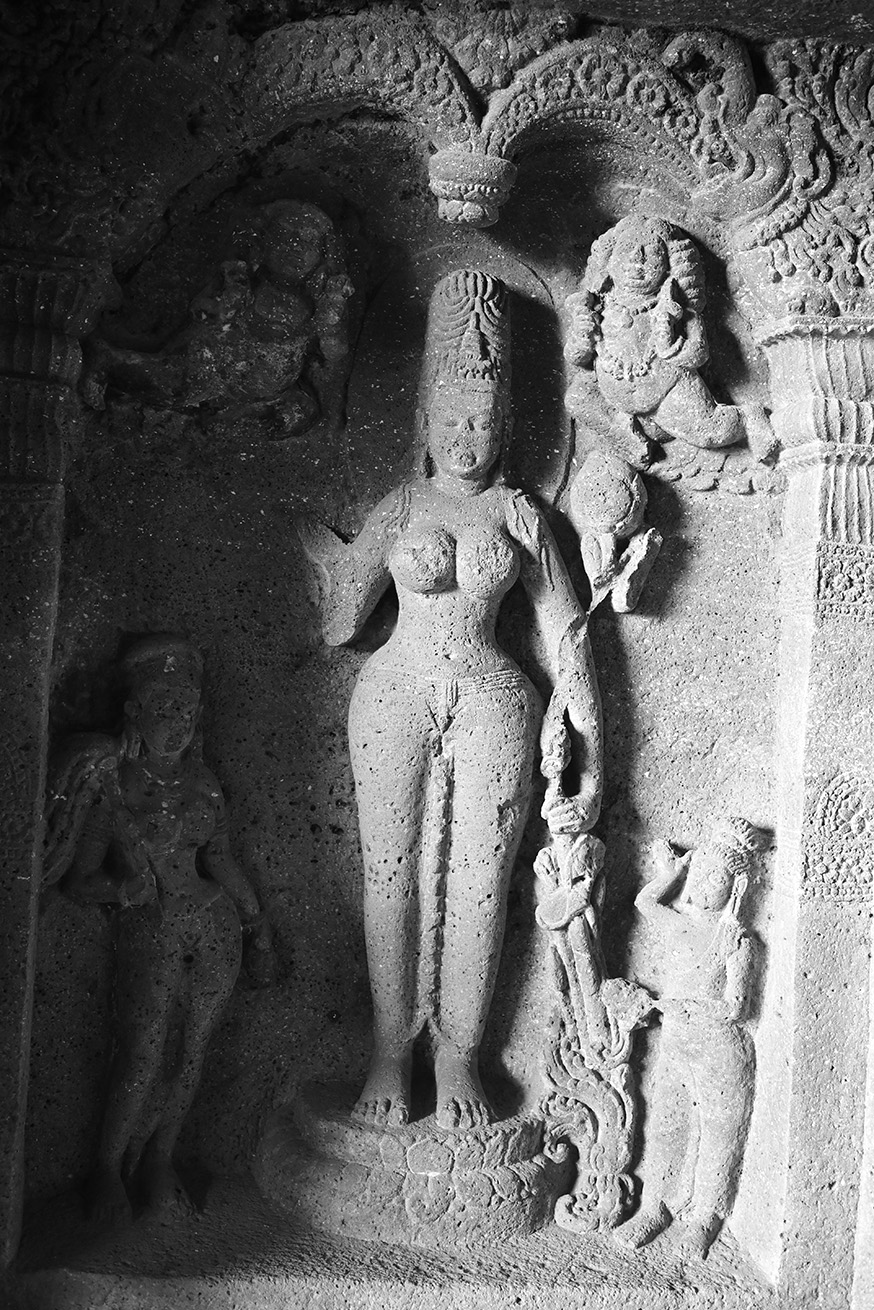
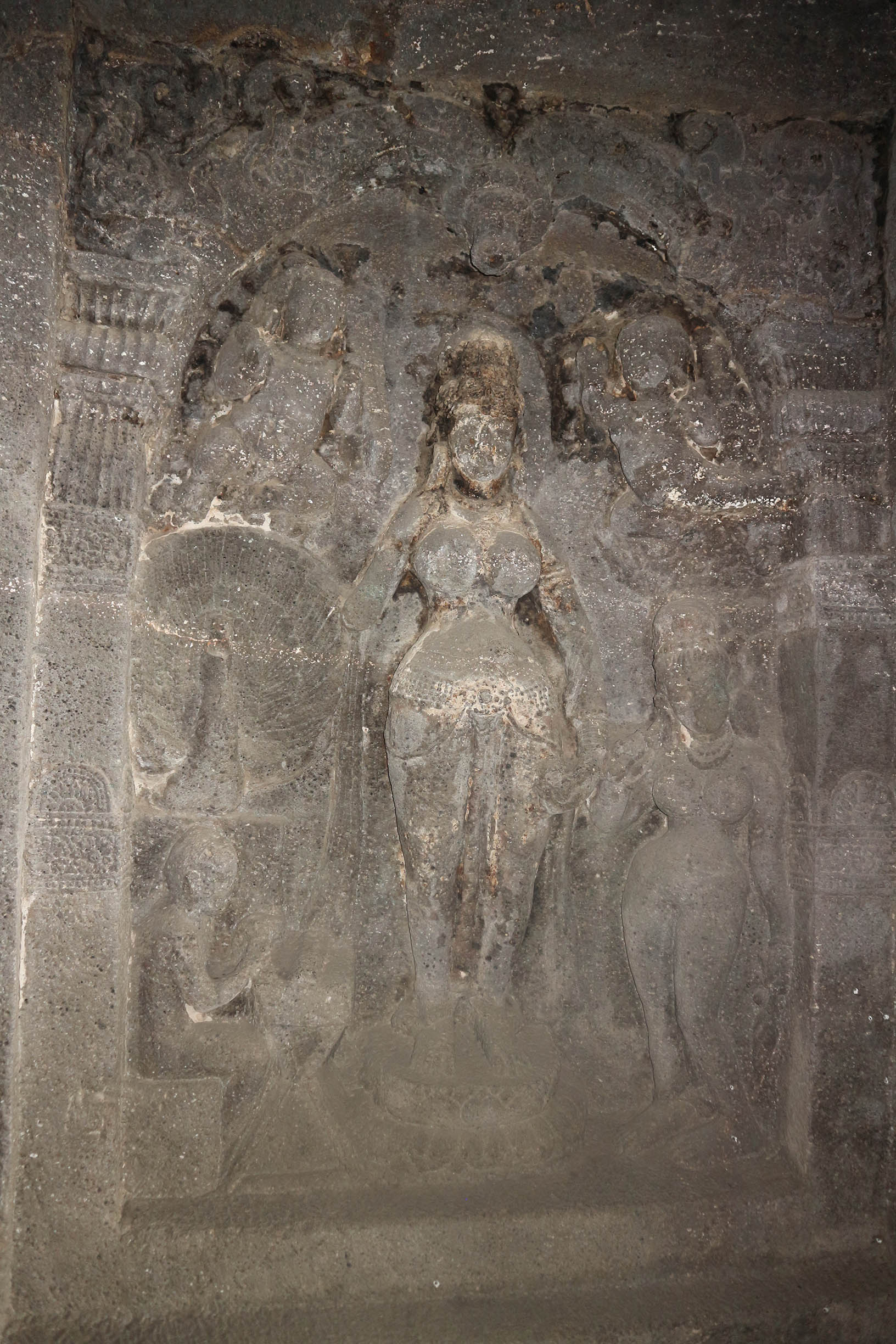
- Mahāmāyūrī (महामायूरी) & Tārā (तारा) Sculptures: Cave No.6 is famous for its intricate depictions of female Buddhist deities. It prominently features Mahāmāyūrī, the Buddhist goddess of learning, depicted alongside a peacok. because of her attributes, she bears a striking visual resemblance to her Hindu counterpart, Saraswati. Opposite her is a beautiful preserved relief of Tārā, the consort of the Bodhisattva Avalokitesvara.
- The Main Shrine: At the far end of the cave sits a sanctuary housing a large seated statue of Gautama Buddha flanked by attendant Bodhisattvas (including Padmapani) and weapon-carrying guardians. The doorway leading to the shrine is remarkably grand and features a rare, meticulously carved makara torana (an auspious arch featuring mythical sea creatures).
- Historical Links: Cave No.6 includes a northern rock-cut passage that provides direct walking access to Cave 9.
1.
2.
Cave No.7
Cave No.7 is an unfinished, large plain Buddhist monastic hall (Vihara).
Overview and Architecture
- Type: Buddhist residential cave/dormitory (vihara)
- Dimension: measures approximately 51 feet wide by 43 feet deep.
- Roof Support: Designed with four floor-to-ceiling columns, though three of the original pillars have broken away.
- Layout: Features high door thresholds and multiple planned monastic cells along the walls that were largely left incpmplete-including five started on the back wall (only two finished), three on the right wall, and four on the left wall.
- Connection: An opening broken through the back wall of one of the side cells directly connects Cave 7 to the adjacent Cave 8.
Mahāmāyūrī, taken on July 19, 2023.
Cave No.14
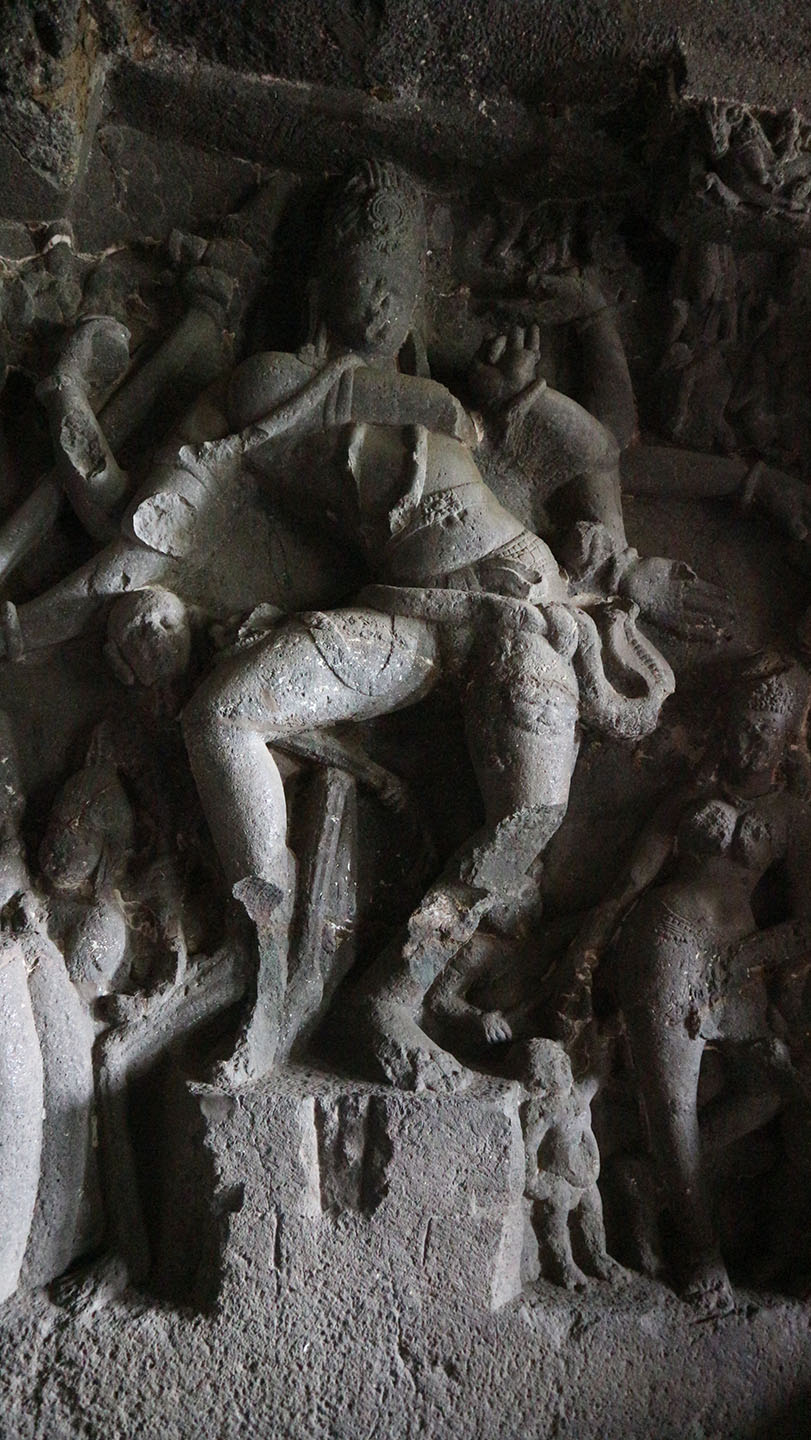 Śiva Naṭarāja from Cave No.14, Ellora Caves, Maharashtra, Bharata, took a picture on July 20, 2023.